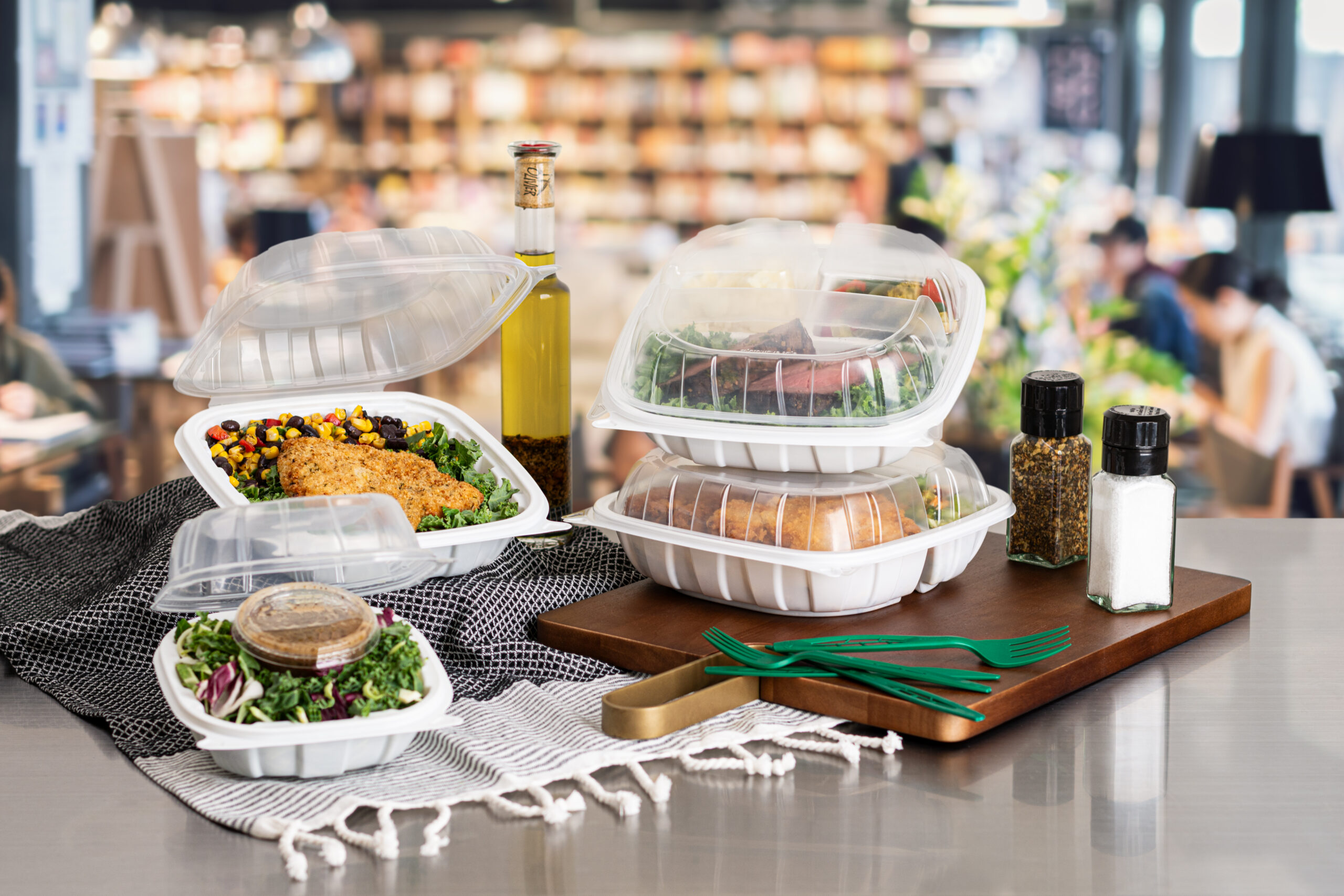
How We’re Enhancing Recyclability by Switching to White Base Plastic Clamshells
While recycling is far from a black-and-white issue, one thing is becoming clear: Black plastic is a challenge in the recycling stream. To address this issue, we’ve added white bases to our Polypropylene Rigid Microwavable Clamshells.
As a leader in sustainable packaging, Inno-Pak is always looking for ways to improve the end-of-life outcomes of our single-use packaging, including the recyclability of the items we sell. Recyclability was the main driver of this decision. We proudly announce that our White Based Polypropylene Rigid Microwavable Clamshells were given the label “Check Locally” by How2Recycle, an upgrade from the “Not Yet Recyclable” label our black-based version carries.
Why the Color of Plastic Matters
You might be thinking, “Why are white bases recyclable but not black ones?” To answer that, you need to start where your recyclables end up: a material recovery facility (or MRF).
In a MRF, all recyclables enter and are sorted by the type of recyclable material. A tight maze of conveyor belts and machinery moves the mix of materials through multiple stations in the facility, and each station sorts a different material. For plastics, the items are scanned by near-infrared, or NIR, sensors. As a plastic item travels through a MRF, it is scanned by the NIR sensors at each station. When the plastic piece hits the correct station for its resin type, the infrared is reflected, and a puff of air knocks like plastics over a barrier and into a pit where they are baled, sold, and shipped to a reprocessing plant.
In the case of black plastics, the NIR sensors do not work. The carbon black used to dye the base resins black absorbs the infrared, rendering the plastic not scannable in a MRF and thus not sortable. All non-scannable plastic is typically collected at the end with all the other non-recyclable items that run through the MRF and sent to a landfill for disposal or incinerated.
According to an article on McGill University’s website by Joe Schwarcz, Ph.D., carbon black is “a form of soot produced by the incomplete combustion of coal, petroleum, or other vegetable matter.” It is then added to the base resin and used to dye it black. Carbon black also absorbs UV light, breaking down the plastic and potentially creating microplastic pollution in the environment.
Recycling Is a Business
We must remember one simple fact: recycling is a business. While we may think of it as a public service, the goal of a MRF, like countless other businesses, is to turn a profit. Recovery facilities are expensive to build, staff, and maintain. Everything that goes into the MRF that cannot be sold to a reprocessed is an expense. Black plastics cost MRFs money. White plastic, if clean and dry, can be sorted, included in a bale, and resold.
For plastic items made from resins like PP (#5) that are more commonly sold into the reprocessing market, the color also helps or hurts the value of the bale. Clear and white are the most sought-after because they have little to no colorant. Dark colors like blues, greens, and reds can be sorted, but colored plastics can typically only be recycled into black or other dark-colored plastic items, which is not ideal.
The End Goal – A Better End-Of-Life
A package’s end-of-life is something to consider. At Inno-Pak, we think about that with all of our product lines. Positive end-of-life for packaging could be reuse. It could be composting. Or, it could be recycling. The goal is to divert packaging materials of value from a landfill into the best and highest use or reuse.
Our move to White Base Polypropylene Rigid Microwavable Clamshells is a way to help increase the amount of plastic that can be recycled. Rigid polypropylene is trending upward in collection and reprocessing across the United States. According to a Bloomberg article from early in 2024, only 1% of rigid plastics are recycled, reprocessed, and made into something new. If changing to a white base can help increase that statistic, it was an easy decision for us to make. We hope you will make the same choice.
Key Takeaways
- Inno-Pak is adding in White Based Polypropylene Rigid Microwavable Clamshells
- White Based Polypropylene Rigid Microwavable Clamshells were given the label “Check Locally” by How2Recycle
- White plastics are scannable and sortable in a material recovery facilities (MRF)
- The IR technology in a MRF cannot scan and sort black plastic regardless of resin type
- Because black plastic is not scannable, it cannot be sorted
- Non-scannable materials are landfilled or incinerated
- Polypropylene acceptance in the recycling stream is growing in the United States
- White base plastic clamshells lead to a better end-of-life for plastics
- The more plastic that can be recovered and recycled leads to a future with less need for virgin plastics and a cleaner environment
- All recyclables, including white plastic, should be clean and dry